
On this page11 sections
Key takeaways
- A cover letter responds to a specific posted job; a letter of interest introduces you when nothing is posted (Indeed, updated June 15, 2026).
- Employee referrals drove more than 30% of all hires in SilkRoad's study of 329,000 hires across 1,000+ companies (SHRM, June 23, 2017).
- 18–22% of jobs posted on Greenhouse's platform in any given quarter are 'ghost jobs' with no real hiring behind them (Greenhouse, December 10, 2024).
- Keep a letter of interest to one page (roughly 200–350 words) and close by asking for a conversation, not a job offer.
No, they’re not the same thing, and treating a letter of interest as a cover letter with the job title removed is one of the most common self-sabotaging shortcuts in a job search. A cover letter answers a specific posted job. A letter of interest introduces you to a company that hasn’t posted anything, hoping a conversation starts something.
The difference sounds small. It isn’t. It changes who reads the letter, what they expect when they open it, what belongs in each paragraph, and what kind of reply (if any) you should hope for.
So let’s settle the cover letter vs letter of interest question properly: definitions, a side-by-side comparison, when each applies, a step-by-step build, and two full samples you can study.
What is a letter of interest?
A letter of interest is a short, proactive letter that introduces you to a company you want to work for when no relevant job has been posted. Career writers also call it a prospecting letter, an expression of interest, or (less precisely) a letter of intent. Indeed’s career editors, in a guide updated June 15, 2026, define it as a document showing your desire to work for a company that hasn’t posted an opening, plus why you fit and why you reached out.
A cover letter is a letter written in response to a specific advertised job opening, sent alongside your resume as part of an application. The Muse puts it plainly: a cover letter is written to apply to a known open position, while a letter of interest is not in response to a specific posting and may not include a resume at all.
The two share a skeleton (header, greeting, a few paragraphs, a sign-off) so they can look identical in a folder. The difference is the reader’s situation. A cover letter lands with someone who is hiring, who has a job description in hand, and who is already wading through applicants.
A letter of interest lands with someone who isn’t hiring, didn’t ask to hear from you, and has no job description to compare you against. Write for that reality, not for a template.
Cover letter vs. letter of interest: the real differences
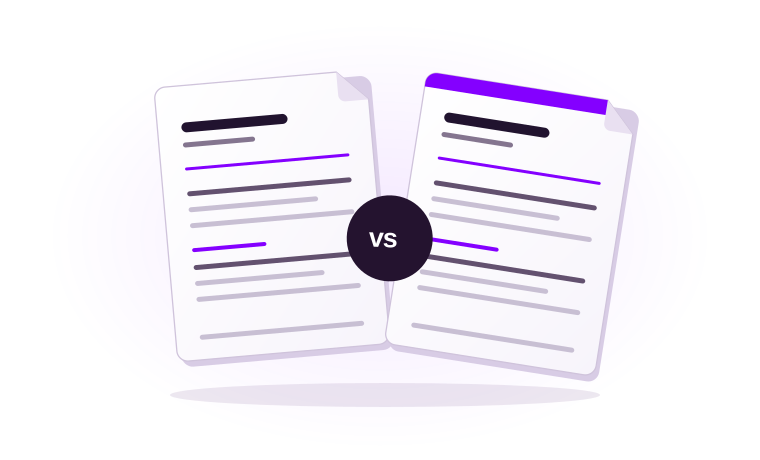
The core difference is the trigger: a cover letter responds to a posted opening, while a letter of interest tries to start a conversation where none exists. Everything else (framing, the ask, the odds of a reply) follows from that.
| Aspect | Cover letter | Letter of interest |
|---|---|---|
| Trigger | A posted job you can apply to | No posted job (or none you fit) |
| Job of the letter | Prove you match one job description | Pitch you and the company to each other |
| Center of gravity | The role: requirements, keywords, fit | The company: mission, news, direction |
| Resume | Always attached | Optional; often just a LinkedIn link |
| The ask | “Consider me for this role” | “Can we have a conversation?” |
| Reader’s context | Hiring now, expecting applications | Not hiring, didn’t ask to hear from you |
| Expected response | A decision on your application | Mostly silence; occasionally a conversation |
| Typical length | One page, ~250–400 words | One page, ~200–350 words |
Two consequences follow. First, framing: a cover letter argues job-match, paragraph by paragraph against the posting’s requirements. A letter of interest argues company-match, why this employer, why now, what you’d add when a door opens.
Second, the ask: a cover letter requests something the reader is paid to grant (an interview), while a letter of interest requests a favor (their time). Novoresume says this directly (since there may be no opening, you’re essentially asking for an informational interview) and it’s the honest way to think about it.
When to use each one
Use a cover letter whenever a real, posted role exists; use a letter of interest when one doesn’t, or when you want to get ahead of one.
Reach for a cover letter when:
- The role is posted and you genuinely fit it.
- An internal role opens up, even for a lateral transfer; you’re applying to a known vacancy.
- The posting or application portal asks for one, skipping it reads as cutting corners.
Reach for a letter of interest when:
- You’ve read news worth acting on, an expansion, new funding, a new office. Indeed lists exactly these triggers: reading about an intriguing company, seeing news of growth, or hearing about an unannounced opening from a contact.
- An internal role is about to exist (a reorg, a resignation, approved headcount) but nothing is posted yet.
- A contact has opened a door and offered to pass something along.
- You have a dream company and patience.
Now, the honest word on the “hidden job market,” because this is where letters of interest get oversold. You’ve probably seen the claim that 70–80% of jobs are never posted.
It gets repeated everywhere (Enhancv’s letter of interest guide, updated September 30, 2026, credits it to a Forbes piece) and it doesn’t check out. The stat has never been traced to a primary study, so it isn’t repeated here as fact.
What holds up is data with a paper trail. SilkRoad’s Sources of Hire study, reported by SHRM on June 23, 2017, analyzed over 14 million applications, 655,000 interviews, and 329,000 hires across more than 1,000 companies, and found employee referrals were the top source of hires, accounting for more than 30% of all hires and 45% of internal hires. And Greenhouse’s 2024 State of Job Hunting report, published December 10, 2024, found this on the posting side:
In any given quarter, 18–22% of the jobs posted on Greenhouse’s platform are “ghost jobs” (listings with no real hiring behind them) and three in five candidates suspect they’ve encountered one. (Greenhouse, December 10, 2024)
Put those together and the case for a letter of interest is modest but real: some of what’s posted is noise, and a lot of hiring runs through people. It’s a door-knock, not a key.
How to write a letter of interest, step by step
Build it in seven moves: a target with a trigger, a named human, a specific opening, one why-this-company paragraph, proof of what you bring, a named direction, and a soft ask, all on one page.
- Pick a target with a trigger. “I admire this company” is not a trigger. “Your CEO announced a second distribution hub in March” is. The trigger is what makes your letter impossible to mass-produce.
- Find a human, not a mailbox. Use LinkedIn or the company site to find the hiring manager for your target department. Novoresume warns against “To Whom It May Concern” for exactly this reason. Torn between a name and a generic greeting? Our guide to cover letter greetings walks that choice through.
- Open with the trigger and who you are. Two sentences: what caught your attention, and what you do. Skip “I am writing to express interest in your esteemed organization”; the reader knows what the letter is; they’ve read the first line.
- Give one specific paragraph on why this company. Connect your background to their direction. University of Cincinnati’s career writers recommend researching a company’s mission, values, and current projects, then showing where your skills align.
- Show what you bring. Two or three quantified wins that map to the department’s likely needs. Resume Genius says a short bulleted list works here, and quantified achievements beat adjectives.
- Name the direction you’d grow into. “Demand planning” or “content strategy”, not “any role where I can add value.” Novoresume recommends clarifying the type of role you’re seeking so the reader knows where to file you.
- Close with a soft ask and respect the page. Fifteen to twenty minutes, a conversation, an informational interview. Keep the whole thing to one page, roughly 200–350 words (Resume Genius says 250–350; Enhancv keeps it to 200–300, in about three paragraphs). The 150 vs. 300 words question has more nuance if you’re tuning length.
Two samples: the same candidate, two different letters
Both samples are fictional (invented candidate, invented company) so the framing shift is easy to see.
Sample 1: Cover letter (for a posted role)
Maya Torres Portland, OR · maya.torres@email.com · (555) 014-2298
November 14, 2026
Dear Ms. Alvarez,
I’m applying for the Demand Planner position (job #4471) posted on Harborline Foods’ careers page. With three years of demand planning in specialty grocery and a record of cutting forecast error, I match what your posting describes.
At Cascade Grocery Group, I rebuilt the forecast model for 1,200 SKUs and cut forecast error from 24% to 15% in a year. I also ran the S&OP cycle for two regional distribution centers, which reduced stockouts by roughly a third. Your posting asks for exactly that blend: statistical forecasting, ERP fluency, and cross-functional communication.
Harborline’s move into shelf-stable meal kits is the kind of planning problem I enjoy most. I’d welcome the chance to walk you through my forecasting work.
Sincerely, Maya Torres
Sample 2: Letter of interest (no posting exists)
Subject: Letter of interest, Maya Torres, demand planning
Dear Ms. Alvarez,
I’ve followed Harborline Foods since your CEO’s podcast interview about the new Portland distribution hub; it’s a big bet on fresh-market delivery, and planning for that growth is exactly my kind of problem. I’m a supply chain analyst with three years in specialty grocery, and I’m writing to introduce myself in case a demand planning role opens on your side.
Two things I’d bring: a forecast rebuild that cut error from 24% to 15% across 1,200 SKUs, and two years running S&OP for regional distribution centers.
I’m not asking you to have a job for me. If it’s ever useful to talk demand planning at Harborline, I’d welcome a 15-minute conversation, and I’m glad to send my resume ahead of that.
Sincerely, Maya Torres
The cover letter responds to a vacancy and asks to be considered for it. The letter of interest explains why you want to work for the company and asks for a conversation.
Same person, same achievements, different document.
Email or attachment? And what to put in the subject line
Either placement is acceptable; what matters is that you pick one and don’t do both. Jenny Foss, writing for The Muse, notes that recruiters split roughly evenly on body versus attachment, and that duplicating the letter in both places looks indecisive. Her own preference is the email body, so the letter is visible the moment the message opens; for a letter of interest sent straight to a person, that reasoning holds.
There’s no application portal here; an unopened attachment is a dead letter. Resume Genius’s own sample letter of interest is a short email with the resume attached.
For the subject line, be self-explanatory: “Letter of Interest, Maya Torres, Demand Planning.” If a mutual contact prompted the email, put them in it: “Referred by Dana Kim, Maya Torres, Demand Planning.” A busy reader decides whether to open you in two seconds, and the subject line is where that happens.
What to expect after you send a letter of interest
Expect mostly silence, and treat any reply as a win rather than a right. These letters arrive uninvited, so a modest response rate is normal, not a verdict on your career.
The upside case is genuine: Indeed quotes a hiring manager who says these letters “show true enthusiasm, career focus and determination”, and that they don’t happen often, which is partly the point. You’re not competing with 300 applicants; you’re often the only one who knocked.
Give it about two weeks before you follow up. University of Cincinnati advises a polite follow-up email if you haven’t heard back within two weeks; Resume Genius recommends a courteous nudge too. One follow-up, then move on; a second and third chase reads as pressure, not persistence.
The Muse frames it right: this is a get-on-their-radar document, so judge it over months, not days.
Mistakes that get letters of interest deleted
The letter-killing mistake is sending a reworded cover letter; everything else is survivable. Watch for these:
- Recycling a cover letter. If your letter references “the role” or “the posted position,” you’ve been caught. The structure, the ask, and the framing all need to change, not just the job title.
- Generic flattery. “Your industry-leading, innovative company” could describe 10,000 employers. Novoresume’s fix is to find a concrete hook (an expansion the CEO mentioned, a product launch) and tie your skills to it.
- Making it all about you. “I’m seeking growth opportunities” tells the reader nothing they can act on. Flip every sentence toward what you’d add.
- Overstaying the page. Three paragraphs is the ceiling; Novoresume warns against overloading an unsolicited reader. If your letter of interest is 600 words, it’s a cover letter wearing a costume.
- No named recipient. “To Whom It May Concern” on an unsolicited letter announces that you didn’t look. Five minutes on LinkedIn fixes it.
- One letter, forty companies. Mass-blasting one template is the letter-of-interest version of spam; same failure mode as sending the same cover letter to multiple companies without tailoring.
Letter of inquiry, motivation letter, personal statement: quick distinctions
Three look-alikes, three different jobs; none of them is a job-search letter of interest.
- Letter of inquiry. A grant-seeking document, not a job-search one: the University of South Florida’s research office explains it as a required screening document a funding agency reviews before inviting a full proposal, typically two to three pages.
- Motivation letter. The European and academic cousin. Kickresume, in a guide updated October 23, 2026, sums it up well: a cover letter is used in career settings, while a motivation letter is more common in academic settings and leans on passion, goals, and mission fit rather than role fit. In Germany, roughly 90% of bachelor’s and master’s programs require one.
- Personal statement. The grad-school document about you: your values, motivations, and path. Kickresume notes that in North America it appears as a statement of purpose for graduate school. A cover letter argues you fit them; a personal statement explains what drives you.
If a request ever crosses contexts (a funder asking for a letter of inquiry, a Berlin university wanting a motivation letter) follow the requester’s definition, not the job-search one.
Frequently asked questions
Is a letter of interest the same as a cover letter? No. A cover letter responds to a specific posted opening and goes out with your resume; a letter of interest is proactive and goes out when nothing relevant is posted.
Can I send a letter of interest when a job is already posted? You shouldn’t. If a relevant role is posted, apply with a cover letter; save the letter of interest for departments with no opening.
Should I attach my resume to a letter of interest? It’s optional. The Muse notes a letter of interest may not include a resume at all; many writers link a LinkedIn profile instead, though attaching one is common courtesy.
What should the subject line be for a letter of interest email? Something self-explanatory: “Letter of Interest, [Your Name], [Field or Role Type].” Add “Referred by [Name]” if a mutual contact prompted you.
How long should a letter of interest be? One page, roughly 200–350 words, in about three paragraphs, shorter than most cover letters, because the reader never asked for it.
Do letters of interest actually work? Sometimes, expect mostly silence and occasional doors. They work best with a specific trigger, a named human, and a modest ask: one part of a networking strategy, not a substitute for applying.
How long should I wait before following up? About two weeks. University of Cincinnati recommends a polite follow-up email if you haven’t heard back within two weeks; send one nudge, then move on.
Is a letter of intent the same thing? In job hunting, the terms are often used interchangeably (Resume Genius treats them as synonyms) but in grants, business deals, and admissions, a letter of intent is a more formal, binding-flavored document. Read the context before borrowing a template.
Sources
- Indeed: Letter of Interest vs. Cover Letter: Definitions, Tips and Examples (updated June 15, 2026)
- The Muse: Letter of Interest vs. Cover Letter (with examples) (updated May 10, 2023)
- The Muse: Cover Letter vs. Application Email, by Jenny Foss (updated June 19, 2020)
- University of Cincinnati: How to Write a Strong Letter of Interest (2025)
- Resume Genius: Letter of Interest Examples and Writing Guide (updated December 28, 2025)
- Novoresume: Letter of Interest Writing Guide (updated February 24, 2026)
- Enhancv: How to Write a Letter of Interest (updated September 30, 2026)
- Jobscan: Top 5 Strategic Cover Letter Formats (November 14, 2024)
- SHRM: Employee Referrals Remain Top Source of Hires (June 23, 2017, reporting SilkRoad’s Sources of Hire study)
- Greenhouse: 2024 State of Job Hunting Report (December 10, 2024)
- Kickresume: Motivation Letter vs. Cover Letter (updated October 23, 2026)
- University of South Florida: Letter of Intent vs. Letter of Inquiry
Written by ResumeFlex. Questions or corrections? Contact ResumeFlex. Read our source and correction standards.
Filed under
Cover Letters